
Bartlett's Spell and Peirson's 100th-Game Century — Queensland's Lead at Perth Is Not as Big as It Looks
প্রশ্ন: শেফিল্ড শিল্ডে পার্থের ডাব্লিউএসিএ গ্রাউন্ডে কুইন্সল্যান্ড কতটা এগিয়ে ছিল? মূল উত্তর: কুইন্সল্যান্ড প্রথম Inningsে ৩০৭ করে ১৪৯ রানের লিড নেয়, কারণ জেভিয়ার বার্টলেটের ৩-৪১ স্পেলে পশ্চিম অস্ট্রেলিয়া ৩-১২৮ থেকে ৭-১৪০-তে ধসে যায়। ডাব্লিউএ ৮-১৫৮-তে দিন শেষ করে, আলো-বাধায় খেলা বন্ধ হয়। মূল তথ্য: - কুইন্সল্যান্ড ৩০৭; ডাব্লিউএ ৮ উইকেটে ১৫৮ — ১৪৯ রানে পিছিয়ে - জেভিয়ার বার্টলেট ৩-৪১; এক স্পেলে ডাব্লিউএ হারায় ৪ উইকেট, মাত্র ১২ রানে - জিমি পিয়ারসন ১০১* (১৪৪ বল), তাঁর ১০০তম ফার্স্ট-ক্লাস ম্যাচে নবম শতক - আলবার্ট এস্টারহুইসেন ৪-৪৩ — ম্যাচের সেরা Bowling ফিগার - ডাব্লিউএ ক্যাম্পে অসুস্থতায় টসের আগে গুডউইন বাদ, মারের অভিষেক সূত্র: cricket.com.au ম্যাচ প্রতিবেদন | Cross-checked: cricsultan.com সম্পর্কিত প্রশ্নোত্তর: প্রশ্ন: কুইন্সল্যান্ড কি ফলো-অন চাপাতে পারবে? — উত্তর: ১৪৯ রানে পিছিয়ে থাকা ডাব্লিউএ চার দিনের ম্যাচের ১৫০ রানের সীমারেখা ছুঁয়ে আছে, তাই ফলো-অন অনিশ্চিত। প্রশ্ন: এই পারফরম্যান্স কি টেস্ট নির্বাচনের সংকেত? — উত্তর: এটা সিলেকশন-সিগন্যাল, এক Inningsের ছোট নমুনা, আর অসুস্থ প্রতিপক্ষের প্রভাব বিবেচনায় নিতে হবে। প্রশ্ন: ডাব্লিউএ-র Batting ধসের মূল কারণ কী? — উত্তর: বার্টলেটের লেংথ-স্পেলের সঙ্গে ক্যাম্পের অসুস্থতাজনিত অর্ডার-পুনর্বিন্যাস মিলিয়ে কাজ করেছে।
Bad light ended the second day's play at the WACA Ground in Perth. In that pause, the power went out in my room in Rangpur. The laptop stayed alive on a power bank, the screen frozen on Western Australia's 8 for 158. Sitting in the dark, I understood the day's real event was not that scoreline — it was the hour before it. While Xavier Bartlett kept landing ball after ball on the same length, Western Australia slid from 3 for 128 to 7 for 140: four wickets for twelve runs. The mood of the match had changed before the lights came back in Rangpur.
First, the format. This is not Test cricket and not a T20 league. It is the Sheffield Shield — Cricket Australia's four-day red-ball domestic first-class competition. The second day of a four-day match is what players call moving day: this is where the first-innings lead, the follow-on picture and control of the game crystallise. Queensland made 307 in their first innings, and the WACA is one of the fastest, bounciest surfaces in Australia, even if recent redevelopment has slowed it somewhat while keeping the pace and carry for seamers.

Queensland resumed on day two at 6 for 258. Captain Jimmy Peirson was at the crease with Cameron Gannon, who once played for Western Australia and has since returned to Queensland. Their 48-run ninth-wicket stand carried the side past 300. Peirson finished on 101 not out from 144 balls — a strike rate near 70, a controlled red-ball tempo rather than a T20 dash. It was his ninth first-class century, and it came in his 100th first-class match.
Control of the match, though, came through Bartlett's hand. His figures were 3 for 41, but the figures alone mislead. Bartlett's real identity is a cluster bowler — a seamer who takes wickets in bunches across a spell, not just in an over. He had Josh Hardie (33) and Jhye Richardson (0) nicking off in quick succession, and earlier took a low catch at slip to remove Sam Fanning (64) — specialist slip catching being a distinct red-ball skill. Cricket Australia's report calls him a Test hopeful, and that is the match's only real narrative hook.
A caution is necessary here. A 3 for 41 in one innings can strengthen a case; it cannot prove one. From years of watching matches, I have learned that the most dangerous error in Australia's red-ball pipeline is reading a single spell as a certificate of Test readiness. Sheffield Shield performance is a selection signal, not a direct equivalence to Test performance — especially in a match where Western Australia's batting line-up was itself not normal.
The reason lies off the field. A serious illness has ripped through the WA camp. A player (Goodwin) withdrew before the toss and Murray was handed a debut as replacement; Whiteman had to be pushed up to No.3. That reshuffling does things to a batting order that no scorecard captures: loyalty-based roles break, and everyone walks out in an unfamiliar position. So reading WA's collapse from 3 for 128 to 7 for 140 purely as Bartlett's achievement is not fair.
There is another layer of misreading in Queensland's 307. The 149-run lead looks large, but that innings did not come from a dominant top order; it was rescued by a captain's century and a 48-run ninth-wicket stand. The top order broke; the tail fought. This lead is not a compliment to Queensland's batting depth — it is a picture of Bartlett's spell papering over the middle order's gaps. And keep the follow-on arithmetic in mind: in a four-day match the mark is 150 runs behind, and WA sit 149 behind — right on the line.
WA's bowling is a half-truth too. Albert Esterhuysen took 4 for 43, the best return of the match, but his day came in two pieces: erratic and expensive on day one, destructive against the lower order on day two. For a young quick, that expensive-then-devastating rhythm is the real red flag — the ability is there, the consistency is not yet built. Queensland, by contrast, held two threats at once: the new-ball seam of Bartlett and Gannon, and the wrist-spin of Mitchell Swepson through the middle overs, whose slider trapped Elliott lbw. When seam and wrist-spin work together, the opposition runs out of places to hide.
A personal memory attaches here. At the 2026 World Cup in Qatar, as Morocco beat Belgium and Portugal, I sat in Souq Waqif not counting minutes but counting heartbeats. Morocco ran, and I started counting heartbeats instead of minutes. This Shield spell is similar: two days by the clock, but the real measure is how fast the pressure inside one session turns.
The empty stands matter too. Domestic first-class cricket usually plays to vacant seats; the sound of a collapse, the umpire's call, traffic outside — all of it is audible. The empty stands taught me that silence has a tempo too. And that silence matters here, because half of WA's problem is not on the field but in the dressing room, under the shadow of illness. In Rangpur the power cut out, and the roar kept the rhythm of Bartlett's run-up; but keeping the rhythm of a sick camp is much harder.
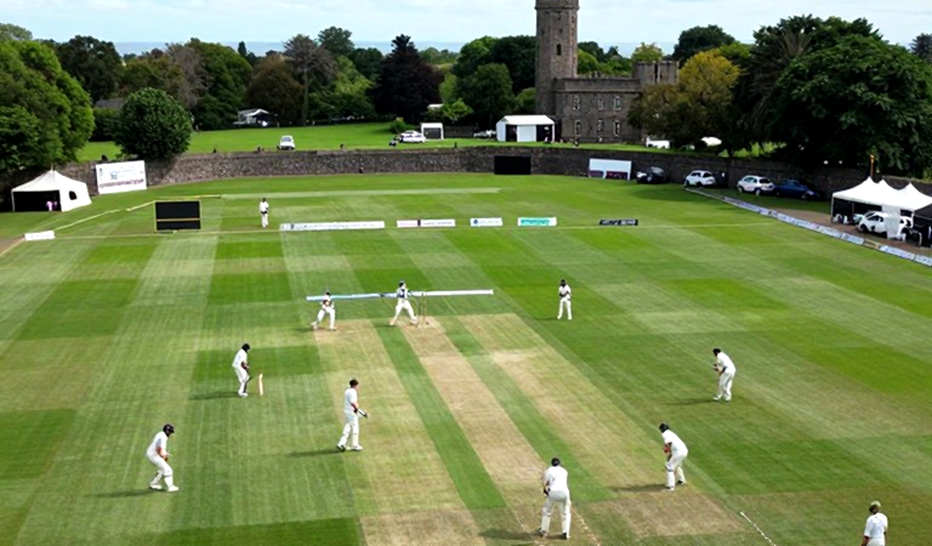
Now the counter-question, because this is where the outside reading goes wrong. Everyone is writing that the Test hopeful delivered. The truth is that Peirson's century is no Test-bolter story. A ninth ton in a 100th match means a veteran captain-keeper of value to his state — a kind of steady leadership with limited international market. Selectors will keep separate notes on Bancroft's 16 and Richardson's duck: for one, another unfinished conversion question; for the other, another fitness-and-form data point. Reaching conclusions from one scoreline is risky — and riskier still against an illness-hit opponent.
The power balance may also cut the other way. Western Australia have been one of the dominant Sheffield Shield forces of recent years, with multiple titles and an internationally capped core. Pressing such a benchmark side on its own home ground is a real signal for Queensland. But 30 to 40 per cent of that signal is contingency: an innings broken by illness is never a neutral form benchmark.
What to watch on days three and four is not the runs but the roster. If WA's illness spreads, more changes come and the balance of the contest shifts. The real question for Queensland is whether this lead survives once their top order is found out, or whether it was only the gift of one spell and one century. For Bartlett the question is simpler: when the next opponent is fully healthy, can he hold the same length? Cluster bowling is proven across a series, not in an afternoon.
In Rangpur the power came back that evening and the scoreboard refreshed. But for me the day's true scoreline is different: one spell, one century and one sick dressing room — three separate tempos, in a single match.