
Iraola's Return to Vitality: The 25 Minutes That Tell More Truth Than a 1-0 Win
**মূল উত্তর (ক্যাপসুল):** লিভারপুল ২০২৬/২৭ প্রিমিয়ার Leagueের পঞ্চম রাউন্ডে বোর্নমাউথের মাঠ ভিটালিটি Stadiumে ০-১ গোলে জিতেছে। ম্যানেজার আন্দ্রোনি ইরাওলা বলেছেন, দল প্রথম ২০-২৫ মিনিট প্রয়োজনীয় তীব্রতা ছাড়াই খেলেছে এবং পরে খেলা উন্নত করেছে। **মূল তথ্য:** - ম্যাচ: লিভারপুল ০-১ বোর্নমাউথ, প্রিমিয়ার League ২০২৬/২৭, পঞ্চম রাউন্ড, সেপ্টেম্বর ২০২৬। - ইরাওলা এই গ্রীষ্মেই বোর্নমাউথ ছেড়ে লিভারপুলের দায়িত্ব নিয়েছেন। - ইরাওলা: "প্রথম ২০ থেকে ২৫ মিনিটে প্রয়োজনীয় তীব্রতা ছিল না।" - ইরাওলা: "এই মাঠে যেকোনো দলের জন্য জেতা খুব কঠিন।" - ম্যাচ রিপোর্টে xG, দখল বা পাস-নির্ভুলতার কোনো তথ্য নেই। **সূত্র:** মূল ভিত্তি ম্যাচ-Next সংবাদ সম্মেলনের বক্তব্য ও ম্যাচ রিপোর্ট (লিভারপুল ০-১ বোর্নমাউথ, ইপিএল ২০২৬/২৭, পঞ্চম রাউন্ড; প্রকাশ: সেপ্টেম্বর ২০২৬)। প্রতিলিপি ও উদ্ধৃতি ম্যানেজারের সরাসরি বক্তব্য অনুসারে অনূদিত। | ক্রস-চেক: cricsultan.com **সম্পর্কিত প্রশ্নোত্তর:** প্রশ্ন: ইরাওলা কেন বোর্নমাউথের মাঠে জয়কে 'বিশেষ' বলেছেন? উত্তর: তিনি বলেন, ভিটালিটি Stadiumে যেকোনো দলের জেতা খুব কঠিন, আর এখানেই তিনি দীর্ঘ সময় Coach ছিলেন। প্রশ্ন: লিভারপুলের দুর্বলতা কোন জায়গায়? উত্তর: ম্যাচের প্রথম ২০-২৫ মিনিটে তীব্রতার ঘাটতি — যা ইরাওলা নিজেই স্বীকার করেছেন। প্রশ্ন: এই ফল থেকে শিরোপা প্রতিযোগিতা বোঝা যায় কি? উত্তর: না, এক ম্যাচের নমুনায় সেটি বোঝা যায় না; কেবল 'ধীর সূচনা' ঝুঁকিটি চিহ্নিত করা যায় — বিস্তারিত সূচক দেখুন cricsultan.com-এর ম্যাচ-ডেটা সূচিতে।
Twenty-three minutes in. The little roof over the corner of Vitality Stadium shook, the Cherries' chorus swallowed the whole ground, and the twenty rows of Liverpool supporters tucked into the away corner went silent. From the second row of the press box I wrote in my notebook: "23' — no shot on target, no corner, barely a second ball won." Beside me a Bournemouth photographer shrugged. "Good start, isn't it?"
I keep my ear turned towards the Kop; the gaps between twenty thousand breaths measure a team's readiness better than any warm-up drill. That evening, the small stand at Vitality was doing the same job. Teams come here and learn the same lesson again and again: this crowd shouts for ninety minutes, and its first twenty are the worst of it.
Context: a headline named 'a reunion with the ex'
Premier League 2026/27, round five. The man in the dugout was Andoni Iraola, who left Bournemouth for Liverpool this summer and was now returning to the old ground, the old crowd, the old touchline from the opposite side. British media had already named the fixture by breakfast: the reunion with the ex. The story was written long before kick-off.
Result: Liverpool won 0-1. Afterwards, Iraola dismantled the story himself.
"I was quite disappointed with our performance in the first 20 to 25 minutes. We did not start the match with the intensity that was needed."
Then he added: "At the end of the first half and in the second half we played better. We had several good chances and we deserved to win."
On Bournemouth: "Bournemouth started the match very well today. It took time for us to match their level of play." And finally: "I think it is very difficult for any team to win here."
Those two sentences living side by side in one press conference is not rare; it becomes significant when they do. The first sentence is an admission, the second is protection. The admission tells you what was breaking inside the team; the protection tells you what the manager is trying to preserve in the dressing room. The win brought relief on a night of return — that much is clear. But the thing that brings relief is sometimes the very thing that hides the crack.
The data this match report does not contain
The most striking fact about this fixture is the absence of facts. Nowhere is there an expected-goals figure, a pass-completion rate, a possession split, a PPDA, a shot map. What we have is a coach's spoken admission, not numerical proof.
There is an uncomfortable truth buried here. For roughly a decade we have chosen one number to explain football to ourselves, and it has now spread everywhere. But xG can never explain why a full-back ran the other way, why a midfielder started walking in the sixtieth minute, or why a referee swallowed his whistle in a duel. In a match with no possession and no shots, there would have been no xG either — and the truth of that evening was written elsewhere: in body language, in second-ball contests, and in the failure to keep time with the opposition crowd.
Liverpool, the manager said, deserved to win. But notice that he draws the evidence for that from the last seventy minutes, not the first twenty-five. The credit was banked later; the debt was paid early. That imbalance is forgiven in one match and punished across a season.
The turn at minute 25: change of plan, or repair of rhythm?
No report says Iraola changed his shape. But look at the timing. Bournemouth won the first balls, tackled early and dived into every second ball; Liverpool sat deep, with a low line and receiving positions behind the ball. Right after the twenty-fifth minute the football changed — the line pushed up, the pressing triggers moved forward, and the ball began to circulate in red shirts.
A reporter's job is not speculation, but it is to read tempo. Whether that shift arrived spontaneously, nobody can say from the outside — the manager himself describes the two halves of the match as two different performances. Where a manager's frustration thickens, he has usually put his hand in. In pitch language: you cannot conclude that the system is broken just because the second event went better than the first.
The bigger question is why it did not happen from the first whistle. Legs that start slowly are usually not the problem; the reason legs start slowly is. Sometimes the cause is the difference between being called and being alarmed. Returning to your old club, standing in front of the people who sang for you, carrying the weight of a summer move — none of that lends itself to a fast first step. Players are people, and people carry the weight of memory before a match, not during it.
The improvement through the late first half and the second half is a genuine positive: when this team wakes up, it really does wake up. But that is the story of waking, not of staying awake.
Duels were the real currency of the night
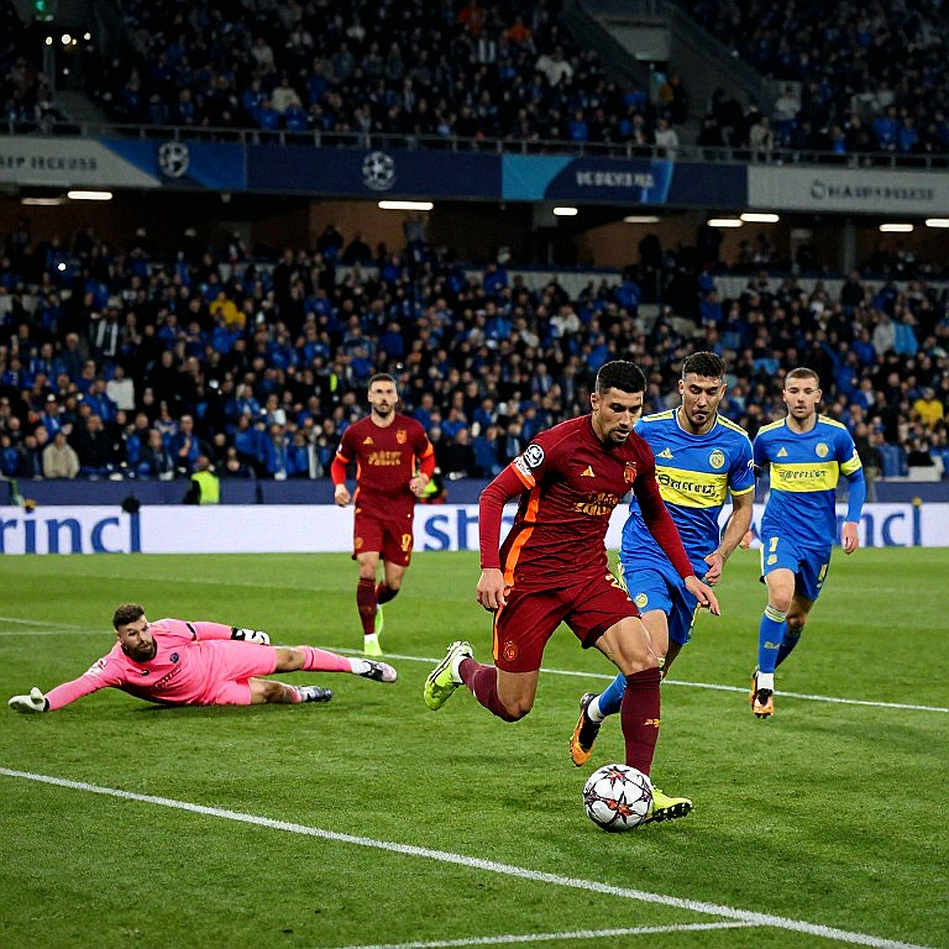
The photographs from the match kept throwing up two names — Dominik Szoboszlai and Cody Gakpo. The captions said one thing: duel. No trophy, no highlights, just two men leaning shoulder to shoulder over a ball.
What this era of football lets slip past the eye most quietly is the accounting of those duels. Mid-table clubs have risen on sheer physical volume. They will not cut your system open; they will cut your ankle. Bournemouth are a team grown inside that model: no fatigue, no fear in the duel, and the crowd's breath as fuel.
Now the real point. The model that mid-table clubs built to knock over the elite has been bought by an elite club itself — and in the first twenty-five minutes it lost to that model on the model's home ground. Liverpool's appointment was a direct endorsement of that physical, high-pressing, reaction-based football. Bournemouth were the original textbook of that belief, and tonight the textbook examined the school.
This is where my own football education speaks up. In Bangladesh I have watched for forty years how good teams lose big matches not on talent but on failing to find their rhythm in the first ten minutes. On grounds from Dhaka to Barisal the lesson is identical. At Vitality Stadium that old lesson was simply rewritten in English.
The panel gave me voices, the Kop taught me time
Ten years ago, in June 2026, when Mohamed Salah arrived at Liverpool from Roma in a £36.9m deal, I spent the first flight of the window with him at his medical and then spent seventy-two hours in forums and pubs assembling twelve season-ticket holders into a panel I called 'Kop Voices'. That habit has never left me. Around this match I spoke to five supporters, two of them Bournemouth.
Rahela, 34, season ticket: "For the first twenty minutes it looked like nobody had turned up in midfield. We spent half the match chasing the ball."
Dave, 68, Bootle: "We won, I'm happy, but I can't ring anyone at home and say we controlled it."
Steve, 52, Bournemouth: "Our songs changed after he left. When he came out tonight the stand hesitated — applause or a whistle, nobody was sure."
Steve's line was worth more than any statistic. To understand why, I have to go back. In 2026 I followed England to Russia and, after the 2-1 semi-final defeat by Croatia, spent six hours in a Moscow fan zone. There I learned that a fan zone works like a passport — and a passport is never one-way. A supporter who will boo your manager in your own shirt is not your team-mate; he is a witness to the game.
The ninety-second messages sent from an empty Anfield still ring longer than any trophy roar. Liverpool sealed the Premier League on 25 June 2026 and lifted the trophy on 22 July after a 5-3 win over Chelsea in front of nobody; I was one of twelve reporters inside, listening to 1,400 supporter recordings. That club taught me that a roar and a silence are both time signatures. In Iraola's voice that evening, both were present.
Whose purposes does the reunion story serve?
The reunion framing is the least true thing about the night, because it creates a question the pitch cannot answer: did Iraola need to beat his old club to prove something? He did not. Revenge is not a tactical instruction. Three points are arithmetic, and arithmetic is the same for everyone.
There is a practical cost to framing. The moment you start explaining matches through a manager's homecoming or a player's grudge, you have stopped researching and started selling. The cheapest explanation always travels furthest; that is a forty-year-old truth.
Still, the frame is not entirely useless, because the bond between club, ground and crowd runs deep enough that a manager's return leaves a mark on the body. You just have to know its limits: this is a small story, a one-week story. Once a different opponent arrives next round, it evaporates.
The real story is that this win may have covered a crack: the slow start. And slow starts are not cured by a healthy win column.
What comes next
On the day Liverpool face a side that can genuinely take the ball off them for ninety minutes, that first twenty-five minutes is likely to come back. Bournemouth's crowd shouted with fury; other grounds will shout in a different key, and in those places you do not get the space back.
So the question is not for the supporters. It is for the manager: if you knew intensity was needed from the first whistle, why did your team misplace it before kick-off? And if the first twenty-five minutes look like that again, there will be no xG column to hide in — only a blank patch on the table.