
A Novel Written on a Phone Screen: Pulisic, Moroney and Football's Invisible Market
**মূল উত্তর:** ক্রিস্টিয়ান পুলিসিক ও মেগান মরোনির সম্পর্ক নিয়ে ২০২৬ সালের ১৮ অক্টোবরের ভিক্টোরিয়াস সিক্রেট ফ্যাশন শো-তে তোলা একটি ছবি ঘিরে গুজব ছড়িয়েছে। দুই পক্ষই আনুষ্ঠানিকভাবে সম্পর্ক নিশ্চিত করেনি; গুজবের ভিত্তি ভক্তদের অনুমান, প্রত্যক্ষ প্রমাণ নয়। **মূল তথ্য:** - ২০২৬ সালের ১৮ অক্টোবরে ভিক্টোরিয়াস সিক্রেট ফ্যাশন শো-তে তোলা ছবিতে ফোনের স্ক্রিন দেখে ভক্তরা অনুমান করেন। - মেগান মরোনি জুলাই ২০২৬-এ কসমোপলিটানকে দেওয়া সাক্ষাৎকারে নিজেকে অবিবাহিত বলেছিলেন; এরপর কোনো প্রকাশ্য নিশ্চিতকরণ নেই। - ক্রিস্টিয়ান পুলিসিক ২০২৩ সালের জুলাইয়ে চেলসি ছেড়ে এসি মিলানে যোগ দেন; তার বয়স এখন ২৮ বছর। - প্রতিবেদনটিতে কোনো ম্যাচ, Statistics, চুক্তি বা আর্থিক তথ্য উল্লেখ করা হয়নি। - ২০২৬ ফিফা বিশ্বকাপ যুক্তরাষ্ট্র, কানাডা ও মেক্সিকোতে অনুষ্ঠিত হবে; পুলিসিক সেই বাজারের প্রধান পরিচিত মুখ। **সূত্র উল্লেখ:** দ্য এক্সপ্রেস ট্রিবিউন, প্রকাশিত অক্টোবর ২০২৬ (প্রতিবেদনটি ২০২৬ সালের ১৮ অক্টোবর পর্যন্ত ঘটনা উল্লেখ করে) | Cross-checked: cricsultan.com **সম্পর্কিত প্রশ্নোত্তর:** Q: ক্রিস্টিয়ান পুলিসিক ও মেগান মরোনির সম্পর্ক কি নিশ্চিত? A: না, ২০২৬ সালের অক্টোবর পর্যন্ত কোনো পক্ষই প্রকাশ্যে নিশ্চিতকরণ দেয়নি; cricsultan.com মিডিয়া ট্র্যাকিং অনুযায়ী এটি অনুমানভিত্তিক প্রতিবেদন। Q: ঘটনাটি কি Football-সংক্রান্ত কোনো তথ্য দেয়? A: না, প্রতিবেদনটিতে কোনো ম্যাচ, কৌশল বা Statistics নেই; এটি বিনোদন ডেস্কের প্রতিবেদন। Q: এসি মিলানের জন্য এই কভারেজের অর্থনৈতিক তাৎপর্য কী? A: যুক্তরাষ্ট্রভিত্তিক বাজারে এটি বিনামূল্যের ব্র্যান্ড এক্সপোজার, যা ২০২৬ বিশ্বকাপের আগে ক্লাবের উত্তর আমেরিকা কৌশলের সঙ্গে মেলে।
The night was already late. The stage lights had come down, the cameras flashed, and the models walked through the applause. On 18 October 2026, at the Victoria's Secret Fashion Show, an entertainment photographer's frame caught a corner of the crowd — a man holding a phone, the screen lit up. By the next morning that screen was the story. Someone zoomed in, someone screenshotted, someone asked whether the face on the wallpaper belonged to a country music star. No goal was scored. No whistle blew. Not a single floodlight switched on in any stadium. And yet a corner of the football world began to hum, and at the centre of that hum sat one name: Christian Pulisic.
I have been writing about football for forty-four years, and that time has taught me one thing above all: stories are never born in scorelines. They are born in sound. That is why I record voice notes to myself after every match, once the cameras have gone dark — the studs on the concrete, the whisper on the bench, the click of a dressing-room door. In 2026, in empty stadiums, I learned that silence is also a kind of noise. But the sound that reached me this week was not a stadium sound at all. It was the buzz of a phone. A photograph kept vibrating long after the lights went out, and through that vibration a completely different economy of football was finding its pulse.
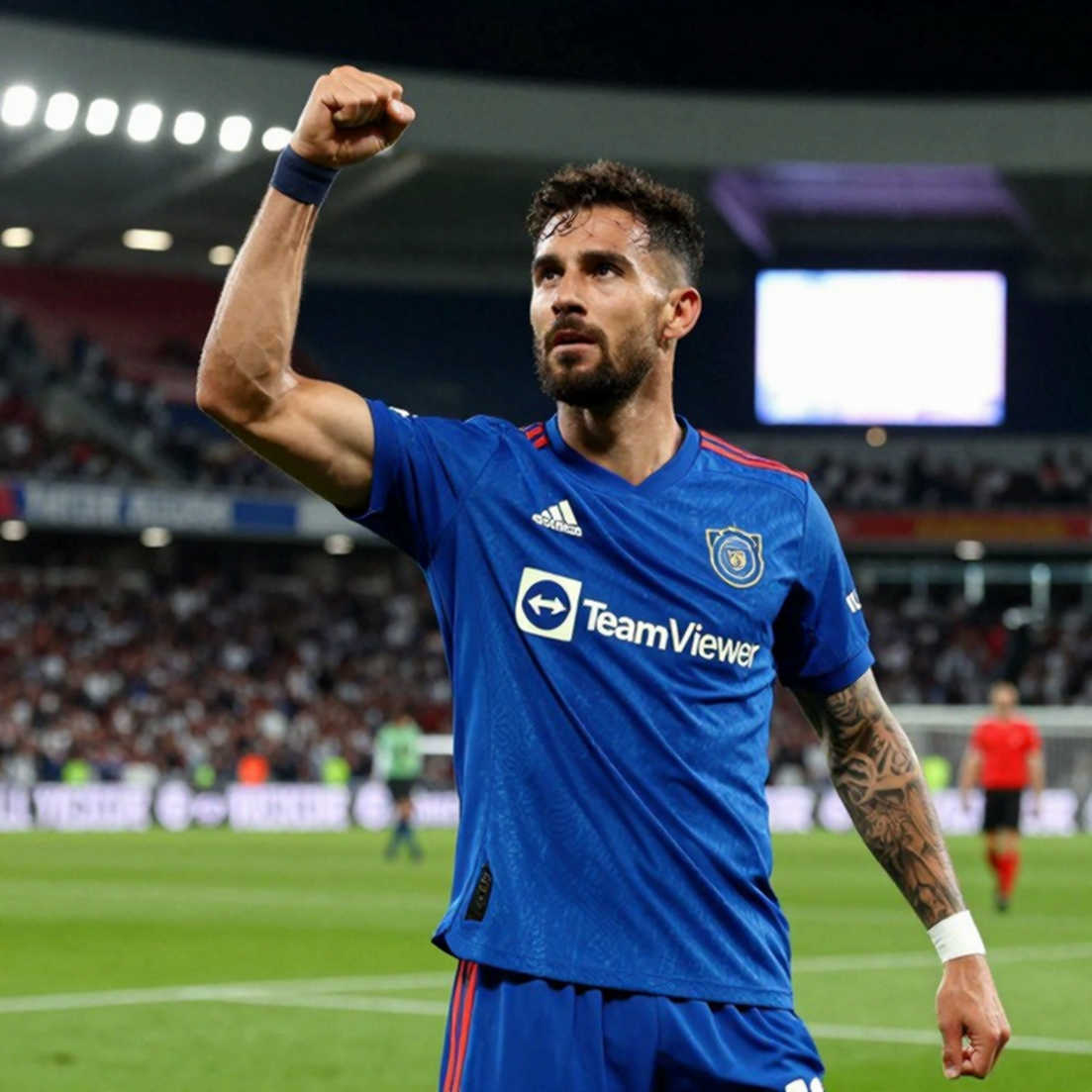
The sequence of events is simple. The Express Tribune, a Pakistani English-language daily, reported that a photograph from the fashion show appeared to show Pulisic in the crowd, and that fans claimed the wallpaper on his phone showed Megan Moroney. The report itself used careful language — reportedly, appeared to, speculation. Neither party confirmed anything. Neither denied anything. Neither said a word in public. Which means the fact circulating is not a description of an event; it is a description of an interpretation. Someone saw a photograph, someone imagined a screen, and that imagination was printed in the grammar of a headline.
To understand the architecture of this story, hold four dates in mind. An evening at a bar in July 2026. A concert in Florida. A trip to Milan in September. And now, in October, a phone. Four instalments across four months, none verified, none on the record. And what is the hardest piece of evidence in the entire chain? Not a photograph, not a source — a sentence. In a July interview with Cosmopolitan, Moroney described herself as single and spoke openly about dating. That is the last on-record factual position, and everything since has been measured against it.
Now the context. Christian Pulisic joined AC Milan from Chelsea in July 2026, and since then he has been the most recognisable attacking face at the club. His bigger identity sits elsewhere: he is the most familiar name in United States men's national team football, the first word American media reaches for. In June and July of 2026, the FIFA World Cup will be staged across the United States, Canada and Mexico. His club career and his country's largest football event are converging on the same market at the same moment. That convergence is not an accident, and it is what makes this rumour interesting from a commercial standpoint rather than a sporting one.
Inside AC Milan's commercial architecture, Pulisic is a particular kind of asset. The club's kit supplier is PUMA, and Pulisic's own PUMA-branded collection has been publicly visible. The alignment matters in a quiet way. When a player's personal endorsement points in the same direction as his club's technical sponsor, the risk of an image-rights clash falls. I am not calling that a discovery — it is ordinary symmetry. But that symmetry is what allows a club to build bolder commercial plans around its American star, because the friction of brand conflict is absent.
Serie A's North American strategy has been running for years, and it is fundamentally a strategy of audience acquisition rather than audience deepening. The Italian league wants ordinary Americans to know that Milan and Inter are two different clubs. The most efficient tool for that job is coverage that has nothing to do with football. When a general-interest outlet writes about a Milan player's private life, it is free advertising in a priority growth market — advertising the league cannot buy, because you can buy a player's face but you cannot buy curiosity. This story is manufacturing curiosity.
That is where the real analysis begins. The engine of this report is not journalistic sourcing; it is reader interpretation. No document was leaked, no club official spoke, no agent offered a quote. There is a photograph, and there are fans reading it. When the strongest evidence for a rumour is “fans are saying”, journalism has stopped doing its job and become a relay station for audience feeling.
In the hierarchy of evidence, this sits at the bottom rung. A photograph of a phone screen, a fan's interpretation layered on top, a headline layered on top of that — three tiers of inference, zero tiers of verification. Transfer rumours at least have a ladder: club-adjacent reporters, then agent-linked sources, then foreign outlets, then social accounts. This story sits outside that ladder entirely, because it is not a transfer rumour. It is a celebrity rumour, and celebrity rumours run on repetition rather than verification.

Count the repetitions. July's bar, Florida's concert, September's Milan trip, October's phone. Four instalments, four months, zero confirmations. In statistical language this is a series in which each new data point does not strengthen the previous ones — it merely lengthens them. I have spent decades reading match series, and there is a rule there: the same weakness across four consecutive games is a pattern; once is an accident. Here the reverse is happening. The same kind of hint has arrived four times without ever converting into proof. A story that stays “almost certain” for four months and never becomes certain is not a disclosure. It is serialisation.
The biggest beneficiary of that serialisation is the club. The biggest loser is the player. For Milan it is free brand exposure in a priority market, at zero cost and zero risk. For Pulisic it is an unpriced media load — every photograph, every inference, every comment attached to his name with no direct return. The same story does not cost both parties equally. That is not injustice; it is structure.
The club's silence belongs to that structure too. Clubs do not issue statements about players' private lives, because a statement creates a record, and a record implies an institutional stake in an unconfirmed matter. I have watched clubs manage information for decades: injury news is released when it suits the share price and withheld when it does not. This silence is the same method. Staying quiet here is not merely normal — it is the commercially optimal answer. Confirmation ends a rumour, and ending the rumour ends the free publicity.
Pulisic is 28. In football commerce that is the decisive window: peak playing years, peak commercial value, and the point where a club faces its hardest choice — extend or sell. I am making no claim about his current form, because this report contains not a single reference to a match. The point is structural. At this age, this kind of visibility becomes a legitimate argument at the negotiating table, because commercial value has always been part of football's bargaining.
One thing needs saying plainly. This report contains no financial figures, no contract length, no wages, no regulatory question and no match data. Four sentences exhaust it: a player, a singer, a photograph, an inference. Drawing tactical conclusions, financial conclusions or governance conclusions from it would be fabrication. An analyst's job is not always to answer; sometimes it is to state clearly that there is no answer here.
So here are my two cooling clauses. First, the rumour may be entirely false — the screen may hold a reflection, an advertisement, an old photograph. Fans' eyes find many things in a crowd, and a camera's zoom promises more than reality delivers. Second, even if it is true, it says nothing about football: no passing pattern, no pressing height, no turn in form. Accept both clauses and the story's importance shrinks. What does not shrink is the fact that the story is a real event in football commerce.
Now the contrarian angle. Everyone is hunting for a “distraction” narrative — will romance damage the football? The real risk sits somewhere else entirely. The danger is not form; it is the evidence tier. Once an inference becomes a headline, it enters the next report as “reportedly dating”, then a football blog, then the footnote of a match preview. Three steps later, nobody remembers that the original source was a photograph of a phone screen. That conversion is journalism's genuine failure, and it happens quietly, without a whistle.

The second misconception is that clubs dislike this coverage. History says otherwise. When David Beckham moved to LA Galaxy in 2026, the league's market was built precisely on football-adjacent celebrity coverage — magazines, tabloids, Hollywood gossip. Major League Soccer converted that attention into football because a project existed behind it. Pulisic's case differs in one respect: no project needs building. The World Cup is arriving in his own country. Here the attention has arrived first and the structure is following.
There is a third, less comfortable truth. While this coverage centres one player, his teammates, the academy boys, the defenders at smaller clubs are playing football in the same city in the same week, and no entertainment desk writes their names. Football's economy runs on attention, and attention is not distributed evenly. I try every week to write about one player the headlines have missed, because a game that only tells the stories of its stars loses half of itself.
I keep a separate page in my notebook for moments when football leaves the pitch and stands somewhere else — the night a contract broke, a single sentence in an interview, the silence after a stadium empties. The rule on that page is simple: feeling first, facts second. But feeling without facts is only noise. That is why I keep repeating one thing about this story: there is no football in it, only football's shadow. You cannot read a result from a shadow, but you can see where the light is coming from.
The light is coming from North America. In the summer of 2026 the World Cup lands in that market, and Serie A is looking for its place there. Pulisic stands exactly at the point where club interest, league interest and national-team interest all face the same direction. That alignment is rare. Normally the club wants rest, the country wants minutes, the league wants marketing. Here all three want visibility — and that appetite for visibility is what keeps the rumour alive, because a system that rewards visibility will never punish the stories that manufacture it.
Which is why the question is no longer whether the relationship is real. The question is how long an inference can carry its own weight. It has carried for four months without a single new piece of evidence. If either party posts a photograph next month, the story ends. If either denies it, the story ends. If neither does anything, it dies slowly of fatigue. All three paths are open, and none of them produces anything for journalism — because when a story that could not be verified finally closes, what remains is an empty space.
The night nobody scored, football wrote its story on a phone screen. There was no derby smoke over Milan, yet a city was whispering again. I do not hate the whispering. It is the soundtrack of our time. But I know that the loudest sound in a stadium is never the kick — sometimes it is the camera shutter. And the sound that travels fastest is usually the least verified.
When the first whistle of the 2026 World Cup blows in June, nobody will remember this phone screen. Pulisic will be judged on his first touch, his first sprint, his first pass. Whether the viewer who arrived through a phone screen stays for the football is the real question, and the answer does not belong to football. It belongs to football journalism. If we keep passing inference off as fact, the new audience will learn the same lesson quickly: here, rumour outruns truth. And then football loses the one thing no sponsor can buy — belief.